
Samsung Benelux, Industry Partnership Project Breda University of Applied Sciences
As part of a six-person student team, developed a gamification concept for Samsung Benelux, aimed at strengthening the brand’s connection with Gen Z through Minecraft.
Summary
As part of a six-person student team, contributed to an innovation challenge set by Samsung Benelux: designing a gamification concept to help the brand build a stronger connection with Gen Z. The project built on Samsung’s existing partnership with Minecraft, using the platform as the foundation for a branded, interactive experience. Within the team, co-authored the Consumer Behaviour Application, the section responsible for grounding the concept in genuine audience psychology, and led the video editing for the final pitch presentation sent directly to Samsung.
Company

Challenge & Role
Samsung Benelux’s brief was broad but clear: find a way to meaningfully connect with a Gen Z audience through gamification, using Minecraft as the vehicle given the brand’s prior collaborations on the platform. The team began with an open brainstorming phase, generating a wide range of possible directions before narrowing these down to five distinct concepts. Each concept was developed into its own full pitch and presented to Samsung in a dedicated video. Within this process, the Consumer Behaviour Application became a central part of the team’s final submission, since it needed to justify, with real theoretical grounding, why the concept would genuinely resonate with its intended audience rather than simply looking appealing on the surface. This section was written together with one teammate. Separately, video editing for the final pitch deliverable was handled independently, assembling the different contributions from the team into a single, cohesive presentation for Samsung.
Key Factors
- One of five final concepts developed and pitched directly to Samsung Benelux as part
of the team’s submission - The concept was among those Samsung responded to positively, out of the five presented
- The team ultimately moved forward with a different concept, as this one’s ambition and
complexity extended beyond what the project’s timeline allowed - Built the supporting audience analysis around genuine consumer psychology and
motivational theory, rather than relying on surface-level gamification trends - Applied established academic frameworks, including Extended Self Theory and
Self-Determination Theory, to explain the specific psychological mechanisms that would
make the concept resonate with a Gen Z audience - Took ownership of assembling and editing the final video presentation delivered to
the client
Solution & Outcome
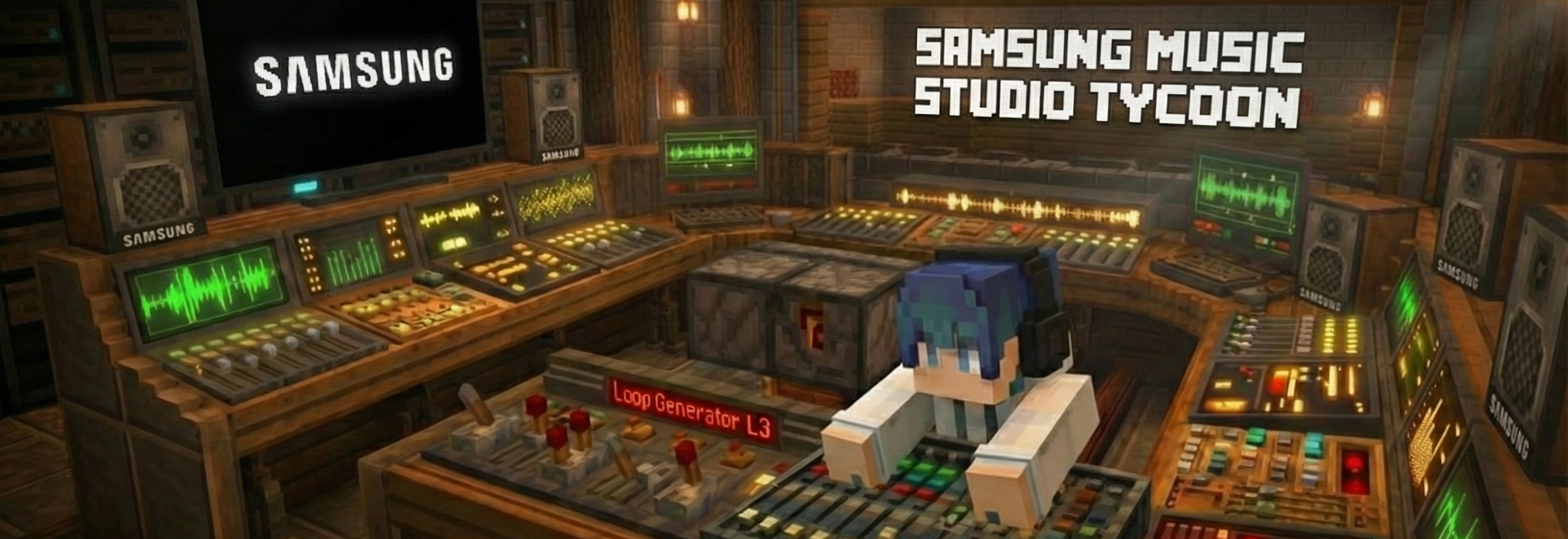
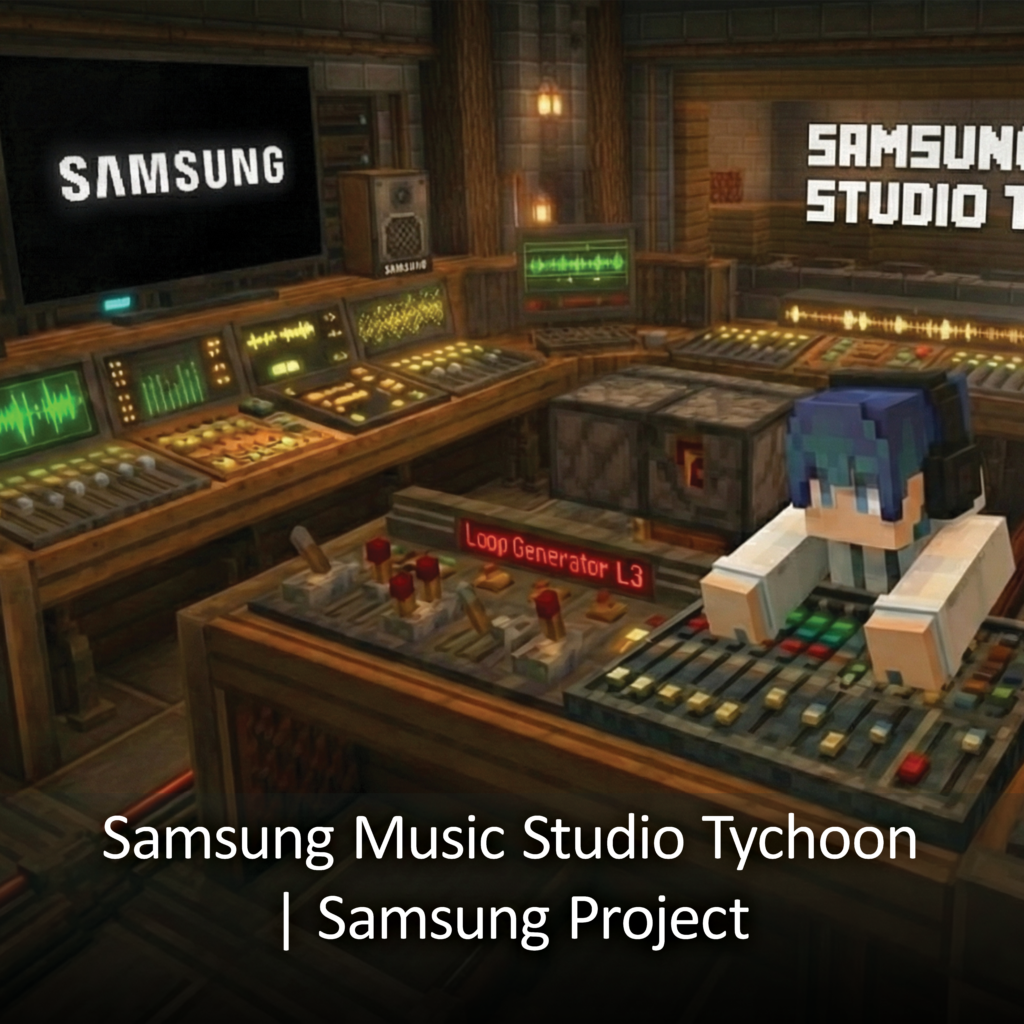
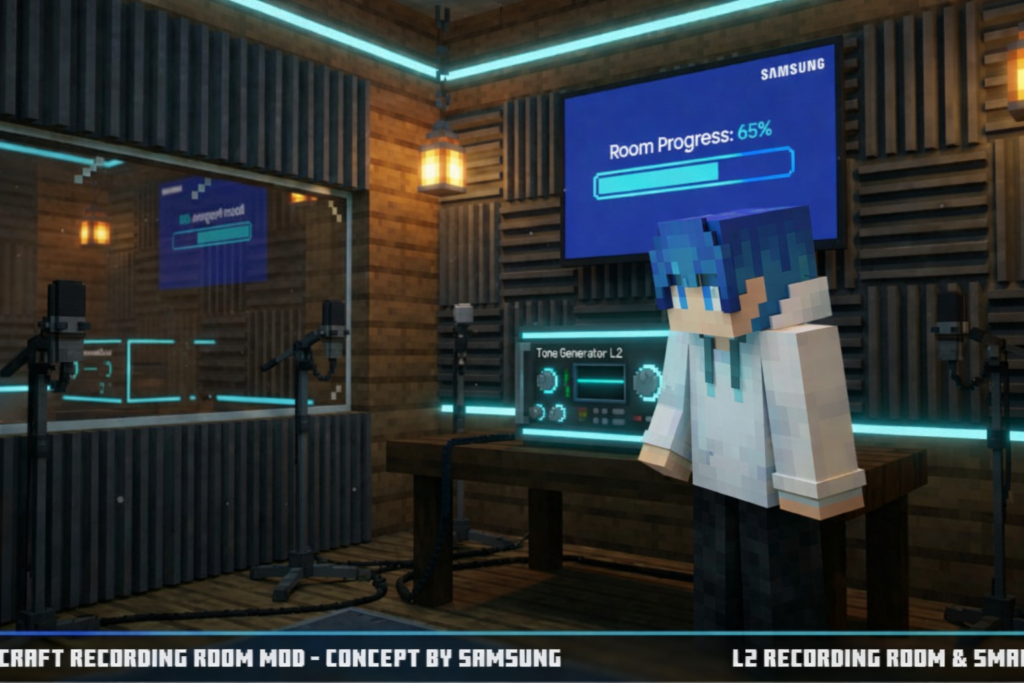
The concept itself was a Minecraft-based “tycoon” experience, in which players gradually build and expand a virtual, Samsung-branded music studio. Rather than treating Samsung products as passive decoration within the game world, devices were designed as functional, unlockable tools that directly powered the player’s progression, faster production, better sound quality, more advanced automation, so that engaging with the Samsung ecosystem became part of the core gameplay loop itself, rather than an interruption to it.
The Consumer Behaviour Application existed to explain why this approach would actually work psychologically, not just conceptually. The analysis centred on Gen Z’s particular relationship with gaming as a space for creativity, self-expression, and identity-building, arguing that a generic branded mini-game wouldn’t be enough to create a lasting connection. Drawing on Extended Self Theory, the argument was that because players would be constructing and personalising their own studio piece by piece, the space itself would start to feel genuinely theirs, not just a backdrop for an ad. This sense of ownership, combined with the gradual sense of mastery built into the game’s progression system, was positioned as the real mechanism that would make Samsung’s involvement feel like a natural part of the player’s creative journey rather than a traditional marketing placement.
Of the five concepts pitched, this was one of two that Samsung responded to positively, a strong outcome given the range of directions the team had developed and the fact that the concept had to hold up against genuine consumer psychology scrutiny, not just creative appeal.
Tools & Skills Used
Consumer Behavior Research ✦ Academic/theoretical analysis ✦ Concept Development ✦ Video Editing ✦ Presentation Design ✦ Pitch Development

